Stepping out of the cinema, my eyes grew misty while a quiet, unnameable peace settled over my heart. Boasting no celebrity cast, no extravagant visual effects, and performed entirely in the authentic Chaoshan dialect, this low-budget independent film left me sitting in the darkened theater long after the credits rolled, reluctant to rise and leave.
Letters to Grandma unfolds a deeply touching half-century tale of devotion, triggered by a dusty overseas Chinese correspondence known as "Qiaopi."
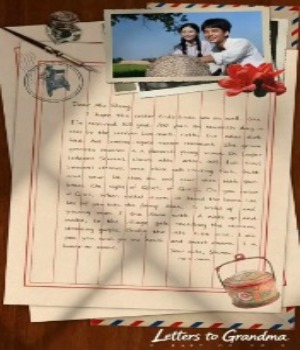 In order to settle his debts, the grandson Xiaowei travels to Thailand in search of his long-disappeared grandfather. Yet during his journey of tracing family memories, he gradually uncovers a stirring truth: the person who corresponded with his grandmother for decades was never his overseas grandfather Zheng Musheng. Instead, it was a complete stranger named Xie Nanzhi, whom Grandma had never met in her life. With quiet fortitude, this ordinary woman upheld the hope of an entire family, guarding Grandma’s lifelong yearning through a gentle act of benevolent deception.
What moves me most profoundly is the film’s restrained, almost sketch-like aesthetic of storytelling. Director Lan Hongchun deliberately avoids sensational tearful plots and exaggerated soundtracks, toning down all dramatic conflict into subtle, understated warmth. The camera lingers on simple, lifelike scenes: soft sunlight spilling over Grandma as she preserves olive greens in the courtyard, the faint clink of teacups on an old wooden tea table, and time-worn mottled textures on the walls of the old ancestral house. These ordinary fragments of life are framed patiently on screen, just like aged Cong tea — mild on the first taste, yet rich and lingering in afterglow.
When the truth is finally revealed in the closing scene, soft sobs ripple across the audience, the sincerest tribute to this restrained style of narration. It dawns on viewers that the most profound emotions in life never need loud or impassioned expression.
The "love letter" in the title carries far more meaning than mere romantic affection. It embodies three layers of profound righteousness and sentiment.
The film features mostly amateur actors, yet every performance is strikingly genuine and moving. Wu Shaoqing, who portrays the elderly Grandma, has lived a simple life of farming and housework. Every glance and every dialect line she delivers carries the unpolished sincerity accumulated through decades of life. The younger cast, though inexperienced, acts with pure earnestness, vividly portraying the hardship, forbearance and tenderness of ordinary people in turbulent times. This unadorned authenticity carries far greater power than polished, industrialized performances.
In the film’s final scene, the two elderly women separated by oceans finally meet. There are no dramatic embraces or hysterical tears. Instead, Nanzhi greets Shurou like an old friend, softly asking whether the cured meat she sent tasted good and promising to send more. The deep affection sustained for half a century settles gently back into the simplicity of daily life.
In an age where phone notifications have replaced the scent of ink and paper, I finally comprehend the true power of "slowness". Feelings that demand waiting, perseverance and silent dedication are precisely the most precious rarity in our impetuous modern society.
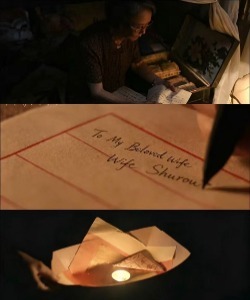 Walking out of the theater, I thought of my own grandparents. They may never have written a single love letter, yet through a lifetime of silence and perseverance, they have written a far weightier confession than any ornate words on paper.
Letters to Grandma teaches me that the finest love letters are never composed of flowery language. They reside in unwavering watchfulness across mountains and seas, in the persistent kindness chosen amid hardship, and in the deep-rooted nostalgia for one’s homeland.
Beneath the faded ink on yellowed paper lie plain yet elegant words, brimming with sincere longing and concern. Musheng stands as a wandering tree rooted far overseas; Shurou remains as a steady leaf guarding the homeland; Nanzhi becomes the silent connecting branch, nourishing and sustaining their separated bond for a lifetime.
May each of us preserve the quiet, unposted "slow letter" hidden in our hearts, even amid the restlessness of the noisy world.
 IPv6 network supported
 English
 français
 italiano
 русский
 español
 português
 Indonesia
 Tiếng việt
 العربية
 中文
中文